NLTK Review
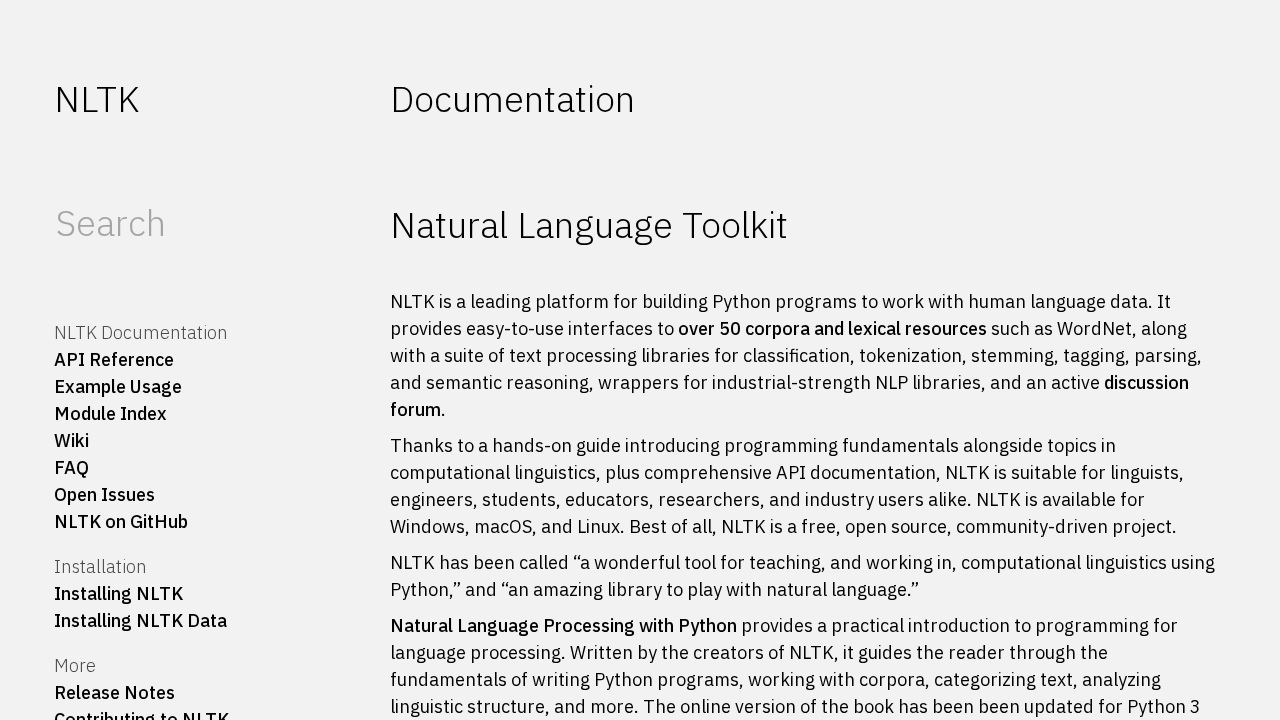
NLTK is a leading open-source Python library providing tools and corpora for natural language processing tasks including tokenization, tagging, parsing, and classification.
Verdict
NLTK is the foundational NLP toolkit for Python, widely used in academia and introductory industry settings for over two decades. Its breadth — 50+ corpora, lexical resources like WordNet, and coverage from tokenization to semantic reasoning — makes it unmatched as a teaching platform. In production contexts it has largely been supplanted by faster libraries like spaCy and Hugging Face Transformers, but remains indispensable for education and linguistic research.
Best for
NLTK is best for linguists, engineers, students, educators, researchers, and industry users who need to work with human language data in Python.
At a glance
Pros & cons
- Free and open source
- 50+ built-in corpora and lexical resources
- Comprehensive documentation and active community
- Cross-platform (Windows, macOS, Linux)
- Slower than modern NLP libraries (spaCy, Transformers)
- Python-only
- Steeper learning curve for beginners
- Less suited for production/large-scale NLP
Related tools
Frequently asked
- Is NLTK free to use?
- Yes. NLTK has a free plan — Free and open source
- Does NLTK have memory?
- No persistent memory — sessions don't carry over by default.
- Can NLTK do voice or images?
- Voice: no. Image generation: no.
- What are the best alternatives to NLTK?
- Browse the AI Tools Directory for related tools.
Looking for an alternative?
MeMakie is an AI character chat platform with persistent memory, group chat, and a community feed of user-built characters. Free to start.
Try MeMakie → Browse more toolsFeatured on MeMakie
Listed here? Show it off and link back to your listing — add this badge to your site.

Notes from users
Concrete observations only — pricing changes, real-world feature behavior, what didn't work for you. Vague hot-takes get filtered out by automated review. No links allowed.
No comments yet. Be the first to add a real-world note about NLTK.