ArtEmis Review
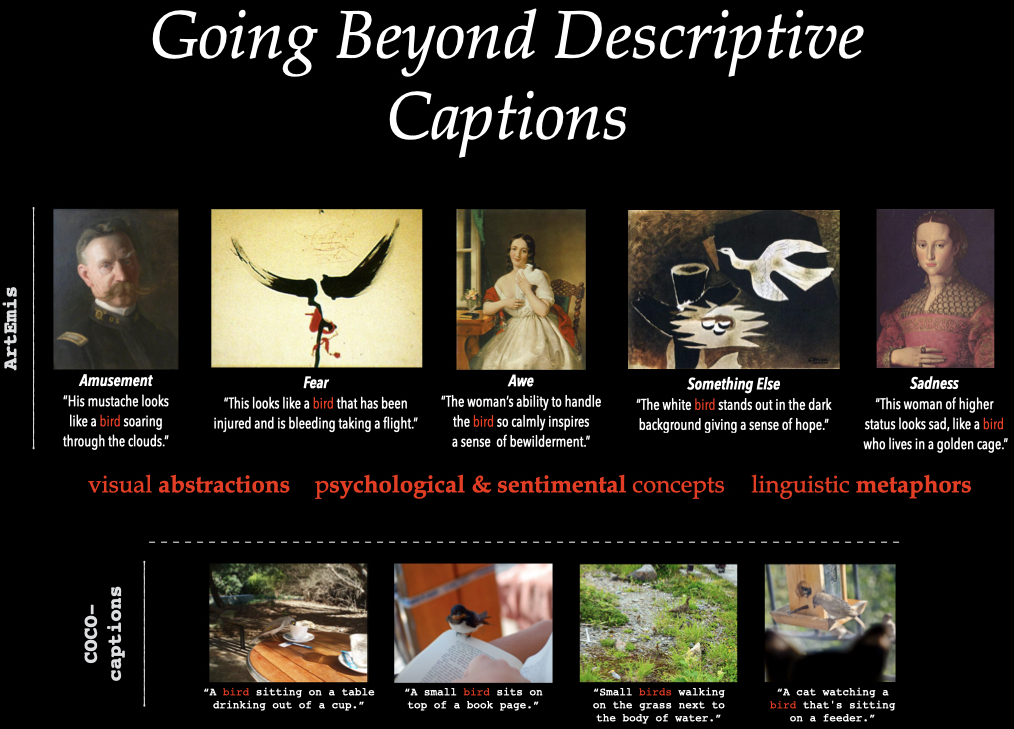
ArtEmis is a dataset and machine learning model for understanding the emotional impact of visual art.
Verdict
ArtEmis offers a unique approach to understanding the emotional impact of visual art, providing a large-scale dataset and accompanying machine learning models. While the results are intriguing, the neural speaker's generations have limitations, such as basic object-recognition mistakes and mode-collapse to generic explanations. Overall, ArtEmis is a valuable resource for researchers and developers in the field of affective computing and computer vision.
What it does
ArtEmis: Affective Language for Visual Art
Best for
ArtEmis is best for researchers and developers working on affective computing, computer vision, and natural language processing applications.
At a glance
Pros & cons
- Large-scale dataset with 455K emotion attributions and explanations
- Accompanying machine learning models for affective captioning
- Unique approach to understanding emotional impact of visual art
- Neural speaker's generations have limitations, such as basic object-recognition mistakes
- Mode-collapse to generic explanations
- Limited to visual art domain
Related tools
Frequently asked
- Is ArtEmis free to use?
- Not entirely — Unknown.
- Does ArtEmis have memory?
- No persistent memory — sessions don't carry over by default.
- Can ArtEmis do voice or images?
- Voice: no. Image generation: yes.
- What are the best alternatives to ArtEmis?
- Browse the AI Tools Directory for related tools.
Looking for an alternative?
MeMakie is an AI character chat platform with persistent memory, group chat, and a community feed of user-built characters. Free to start.
Try MeMakie → Browse more toolsFeatured on MeMakie
Listed here? Show it off and link back to your listing — add this badge to your site.

Notes from users
Concrete observations only — pricing changes, real-world feature behavior, what didn't work for you. Vague hot-takes get filtered out by automated review. No links allowed.
No comments yet. Be the first to add a real-world note about ArtEmis.