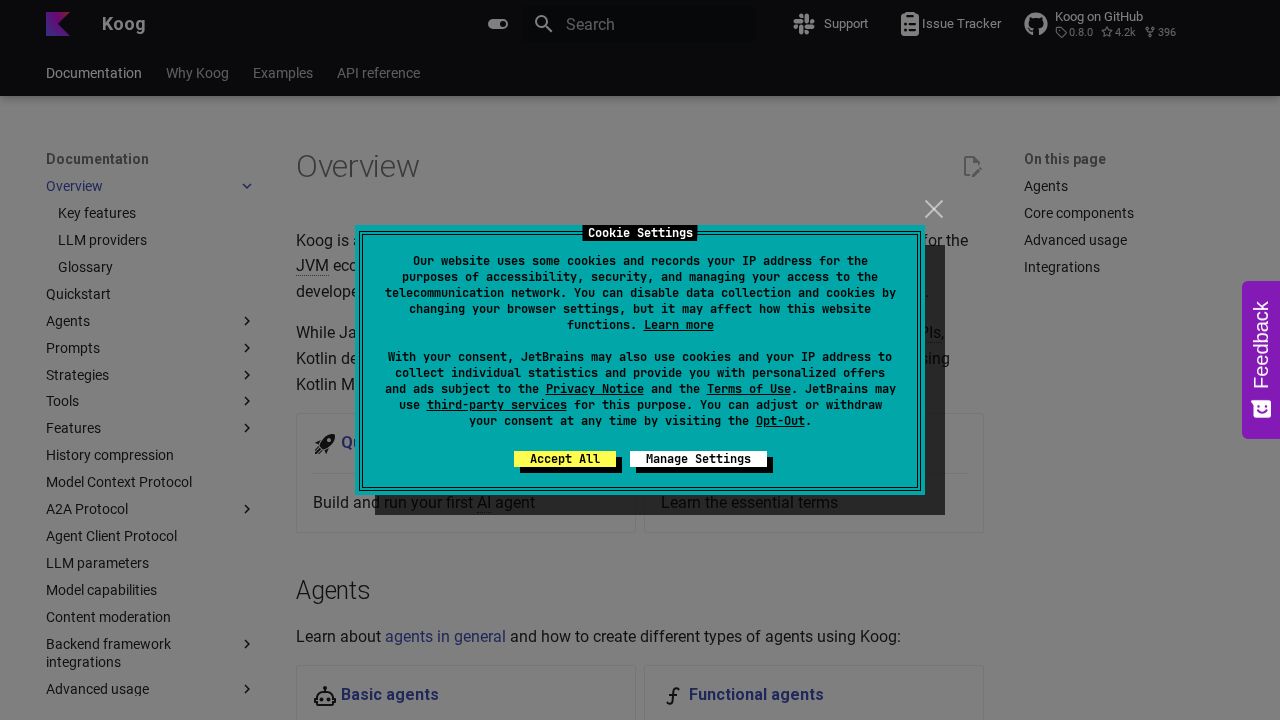
Koog Review
Koog is an open-source Kotlin framework for building and orchestrating AI agent workflows with language models.
Verdict
Koog is JetBrains' open-source Kotlin-based agent framework designed for developers who want to compose, run, and manage LLM-powered agents programmatically. Its main strength is tight Kotlin/JVM ecosystem integration and a clean agent-orchestration API. The tradeoff is a narrow audience — teams outside the Kotlin/JVM world will find little reason to adopt it over Python-native alternatives like LangChain or LlamaIndex.
Best for
Koog is best for developers and organizations looking to build custom language models and integrate them into their applications.
At a glance
Pros & cons
- Open-source and MIT-licensed
- Kotlin-native agent orchestration
- Backed by JetBrains ecosystem
- Limited to Kotlin/JVM developers
- Early-stage documentation
- Smaller community than Python alternatives
Related tools
Frequently asked
- Is Koog free to use?
- Yes. Koog has a free plan — Open-source (MIT)
- Does Koog have memory?
- No persistent memory — sessions don't carry over by default.
- Can Koog do voice or images?
- Voice: no. Image generation: no.
- What are the best alternatives to Koog?
- Browse the AI Tools Directory for related tools.
Looking for an alternative?
MeMakie is an AI character chat platform with persistent memory, group chat, and a community feed of user-built characters. Free to start.
Try MeMakie → Browse more toolsFeatured on MeMakie
Listed here? Show it off and link back to your listing — add this badge to your site.

Notes from users
Concrete observations only — pricing changes, real-world feature behavior, what didn't work for you. Vague hot-takes get filtered out by automated review. No links allowed.
No comments yet. Be the first to add a real-world note about Koog.